NHL Opens Innovation Lab to Accelerate Broadcast, Officiating, and Fan Tech
New Verizon-backed facility at Prudential Center gives the league a year-round arena testbed for broadcast workflows, officiating tools, private 5G use cases, and new fan-facing experiences.

The NHL has opened a new Innovation Lab powered by Verizon inside Prudential Center in Newark, creating a permanent simulated arena environment where the league and its partners can test emerging technology without waiting for a game-day window or temporary arena install. The facility was developed with the New Jersey Devils and Verizon and is tied directly into both the main arena and the attached practice rink, giving the league a controlled space to trial tools for hockey operations, game presentation, and fan engagement.
What makes the lab notable is not just the hardware inside it, but the operating freedom it creates. , reported that NHL technology executives view the space as a “33rd arena,” with fewer restrictions around network operations and security, and with dedicated room for temporary vendor installs. That setup allows the league to move faster on testing camera systems, connectivity, and software workflows that are difficult to evaluate during the regular season when ice time, lighting conditions, and arena calendars are tightly constrained.
“With this environment we can start that collaboration even earlier because we can stretch the art of the possible not only in the coverage of the game but also officiating.” – Grant Nodine, SVP of Technology, NHL
The lab’s infrastructure is built around Verizon’s private 5G network, with dedicated technical space, fiber connectivity to the practice rink and main bowl, and support for multiple connection types. Verizon said the network is designed for use cases that need high reliability, low latency, and strong security, including camera systems, referee communications, and other real-time operational tools. One of the early tests involves Sony Hawk-Eye cameras in the goal nets running over the private 5G environment.
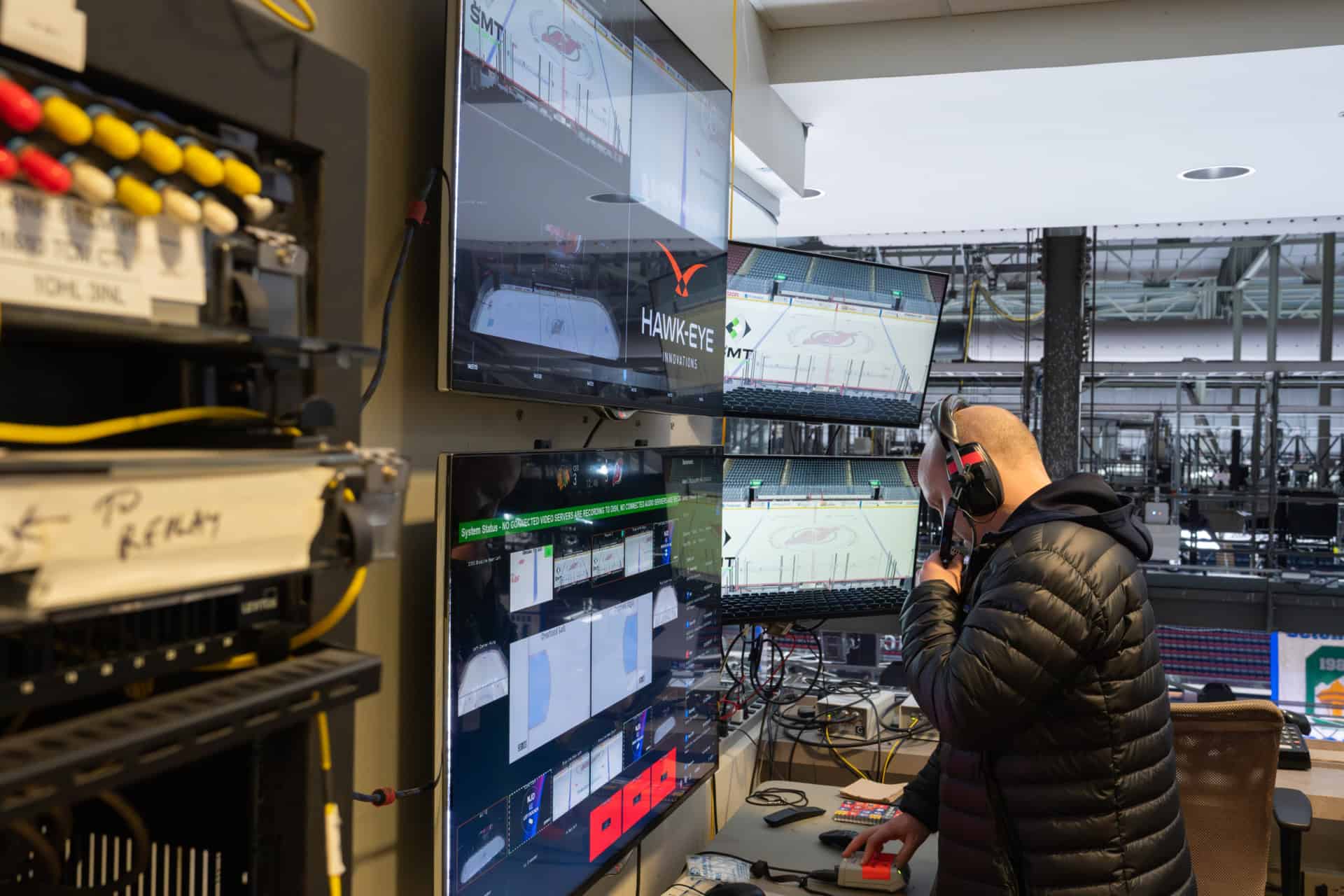
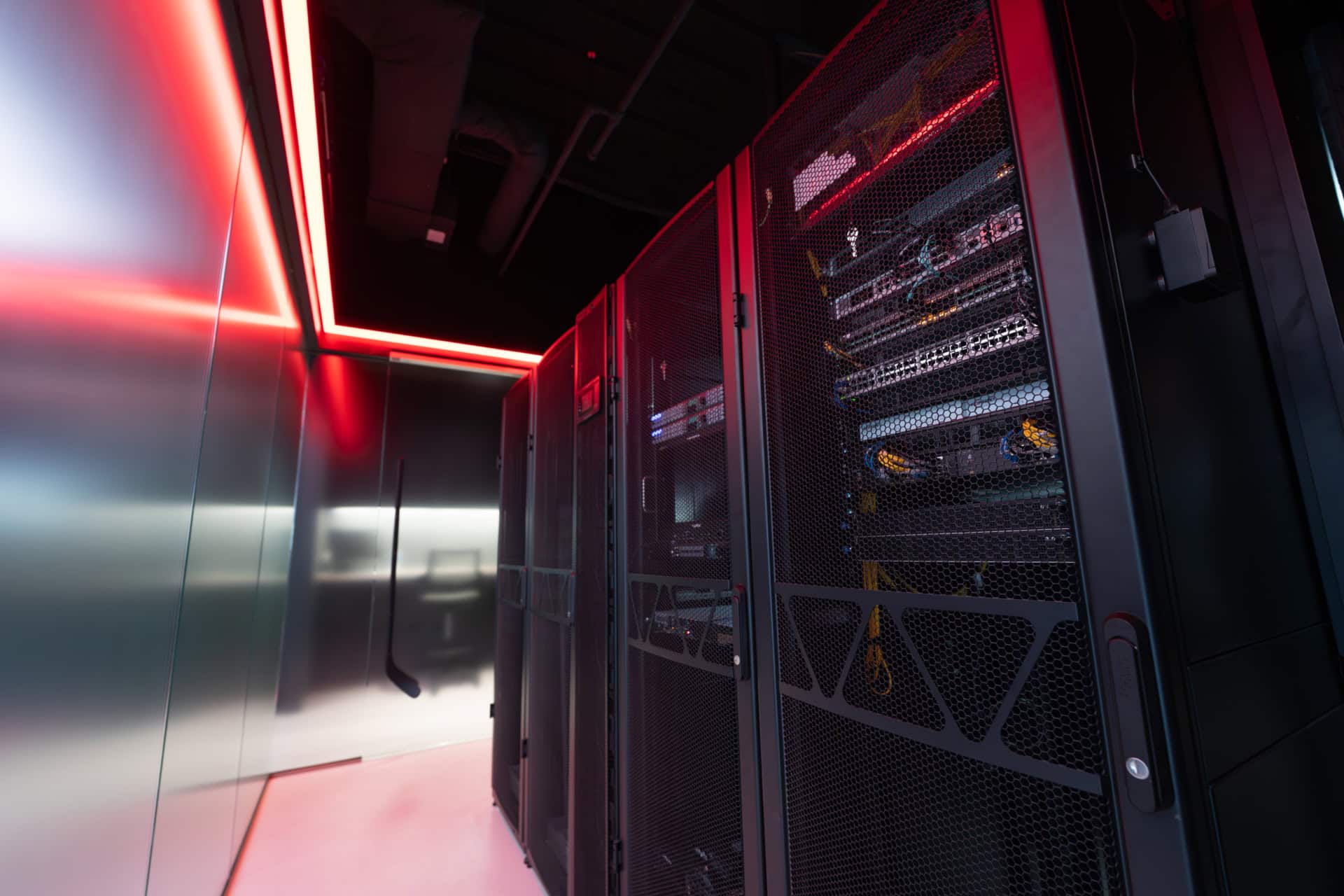
That creates a broader R&D platform for the league. Sports Business Journal reported that the NHL is already exploring concepts such as referee communications with the Situation Room in Toronto, visual clock displays embedded in rink boards, integrations between NHL EDGE tracking data and arena lighting systems, and new uses for immersive camera content captured in 10.5K resolution. In practical terms, the lab gives the league a place to test whether those ideas work technically before pushing them into live NHL environments.
The broadcast implications are significant as well. Sports Video Group noted that broadcasters can use the facility to test gear and workflows, while the NHL has framed the space as a proving ground for technologies that could affect coverage, production, and operational support. That matters because the same infrastructure being used for officiating and hockey operations can also support new camera deployments, edge connectivity, and content transport models that eventually shape the live product seen by fans.
The fan-facing opportunities are part of the same roadmap. NHL and Verizon both positioned the lab around improvements not only to on-ice performance and game operations, but also to fan engagement. Verizon’s private 5G build and the venue test environment open the door to experiments involving edge-delivered content, arena-based experiences, and new ways to move data from the ice and bowl into consumer-facing products.
“We believe that we will be able to create new innovations out of this lab and we’re going to be able to change the game experience and the fan experience as well.” – John Frantzeskakis, SVP of Technology Operations, NHL
For the NHL, the larger advantage is speed. Rather than discovering a promising technology at a trade show or from another sport and then facing months of operational friction to test it, the league now has a permanent environment where vendors, broadcasters, teams, and league staff can move from idea to evaluation much faster. That is why the new lab looks less like a one-off sponsorship activation and more like core innovation infrastructure for the league’s next phase of technology development.
 NHL Public Relations